
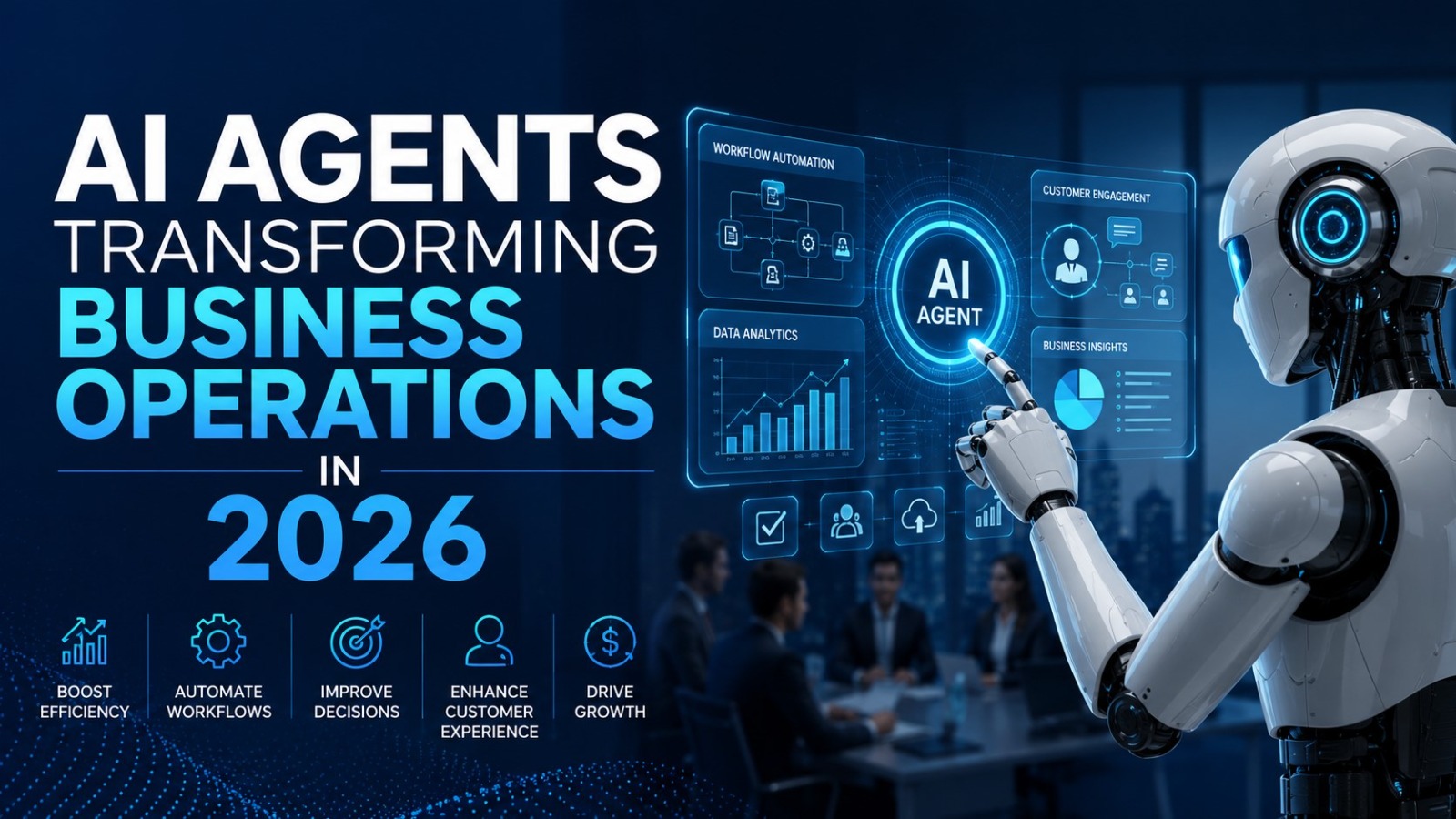
The Rise of Autonomous Intelligence in the Modern Workplace
In recent years, the speed of development in Artificial Intelligence (AI) technology has gone well beyond anything we have seen before. One of the more sophisticated and disruptive technologies of this new generation, AI Agents, will offer new operational, competitive, and growth opportunities for the enterprise. Digital Intelligence has gone beyond the simplistic and passive model of responding to requests and fulfilling tasks. AI Agents have now reached a high state of autonomy in decision-making and process orchestration, and are now capable of managing complex and evolving business functions and interactive collaborative work with employees.
AI Agents are being adopted by virtually all companies and sectors in an attempt to automate operations, lower costs, and improve customer service, while achieving business goals and driving productivity gains that are unprecedented. The window of opportunity for businesses to adopt AI Agents will likely close as companies are more fully equipped to meet the demands of their customers and adapt to changing business environments.
What Are AI Agents?
AI Agents are autonomous software systems that perceive, reason, and decide on tasks. Using AI Agents to automate processes requires minimal human involvement.
While automation technologies operate by executing a set of rules determined in advance, AI Agents are capable of performing the following:
- Learning from data and interactions
- Adapt to changing environments
- Execute multi-step workflows
- Communicate with other systems and agents
- Make context-aware decisions
- - Continuously improve performance
AI Agents are digital employees and therefore can be utilized to perform the following: work on business processes in a continuous and seamless manner, automate and complete business tasks, conduct data and information analysis, and perform and assist in the development of business and operational strategies.
Why 2026 Is the Breakthrough Year for AI Agents
- Considerable improvements in technology will see the mass adoption of AI agents in 2026.
- Advanced Large Language Models
- Modern AI agents better understand their environment and can process and modulate instructions. Today, these AI agents can implement the most complicated workflows.
- Multi-Agent Collaboration
AI agents can now be purchased in multiple units that work in unison. For example, one agent can be instructed to gather information. Another may be instructed to analyze gathered information. The final agent can complete the required tasks and provide the results.
Improved Integration Ecosystems
AI agents now have the capability to connect and integrate with different software used in companies, including CRMs, ERPs, as well as cloud and communication tools, among others. This makes the complete automation of processes a fact.
Enhanced Decision Intelligence
AI agents of yesteryears were not as capable of evaluating more than one variable to facilitate timely and accurate decision-making. The present-day agents have the capability to evaluate numerous variables.
Key Areas Where AI Agents Are Transforming Business Operations
1. Customer Service and Support
AI agents have benefited customer service in a huge way. The present-day AI agents can carry out the following tasks:
- Resolve customer concerns on their own
- Process refunds and returns
- Field technical support calls
- Assist in placing a case in the queue
- Make personalized suggestions
- Assist customers in various languages
With the new technology, companies can now decrease the average lag time to zero. AI agents have helped companies prioritize customer satisfaction.
2. Sales and Revenue Growth
AI agents have Advanced sales and make selling much easier.
AI agents can:
- Determine optimum prospective clients
- Assess client-related data
- Arrange appointments
- Formulate automated, tailored messages
- Conduct automated follow-ups
- Determine sales outcomes
AI agents facilitate the selling of products and services by enabling the sales teams to focus on selling and building customer rapport through the automation of analytical and administrative tasks.
3. Supply Chain Optimization
The disruptive economies of the recent past have signaled the necessity for the improvement of management of operations.
AI agents are capable of monitoring:
- Stock available for supply
- Supplier evaluations
- Assess trends of demand
- Determine optimal shipping routes
- Assist in the procurement of goods and services
AI agents help eliminate operational issues by assessing operational data, predicting shortages, and recommending suppliers.
4. Human Resources and Talent Management
AI agents are gaining traction in HR departments in an effort to improve staff experience by layering automation to routine tasks.
For example, AI agents can automate:
- selection of candidates
- periodic evaluation
- automated emailing to schedule interviews
- onboarding
- performance appraisal
- training assignment
This automation would allow HR staff to concentrate more on employee engagement and strategy.
5. Financial Operations
The scale of automation of finance functions using AI technology is unrivaled. Functions traditionally performed by finance personnel are now the domain of AI agents.
AI agents are able to:
- Automate receipt of payments
- Automate the payment of suppliers
- Enact account reconciliation
- Fraud detection
- Assess monetary movements
- Automate creation of financial statements.
The use of AI agents to automate finance functions improves the accuracy and speed of finance operations.
6. IT and Cybersecurity Management
Artificial intelligence (AI) agents are becoming indispensable to safeguarding complex digital infrastructures for several reasons.
AI agents are capable of the following:
- Continuously monitor systems
- Detect anomalies
- Mitigate cybersecurity threats
- Automate the response to cybersecurity incidents
- Manage system updates
- Optimize cloud resource allocation
The aforementioned techniques allow companies to improve digital security and minimize the risk of system inoperability.
The Business Benefits of AI Agents
Increased Productivity:
The introduction of AI agents in the workplace helps employees increase their output by removing mundane and repetitive tasks.
Cost Reduction
Automation helps improve the bottom line of organizations by lessening the physical needs of a workforce and preventing mistakes.
Faster Decision-Making
By processing large sets of data in a short time, AI agents help employees make decisions and take actions at a much greater speed and efficiency.
Improved Accuracy
AI agents help improve the outcome of tasks by performing the same task with the same level of consistency and reliability, unlike when a task is done by a person.
Scalability
Organizations have the ability to grow their systems to capture market opportunities without the need to grow their workforce.
Enhanced Customer Experiences
Enhancements in Artificial Intelligence have allowed organizations to create a more enjoyable and personalized experience to their customers through the introduction of AI.
Industry-Specific Applications
Healthcare
AI agents in the healthcare systems assist with patient scheduling, medical records, and workflow automation.
Banking and Financial Services
Many banks and other financial systems use AI agents in their systems to service their clients by handling all of their customer service inquiries, monitoring compliance, assessing risk and fraud.
Manufacturing
Scheduling production, monitoring the health of equipment, and quality control have all been improved through the use of AI agents in manufacturing.
Retail and E-Commerce
AI agents have aided systems in the retail and e-commerce areas for customer service, personal shopping, inventory forecasting and personalized marketing.
Logistics and Transportation
The optimization of all delivery routing and fleet monitoring is the specialized function of AI agents that improves all operations in the transportation system.
Challenges Businesses Must Address
Despite the advantages AI agents present to organizations, businesses must begin to innovate to address a range of issues.
Data Privacy and Security
AI agents pose a need for adequate protection of sensitive business data, provided by the business’s data security infrastructure, and for the business to meet the requirements of data protection laws.
Governance and Accountability
The design of frameworks for the automated systems of AI agents and the monitoring of the systems and decisions of the frameworks is required.
Workforce Adaptation
Adopting AI in business requires the ability to employ, train, and manage personnel, in addition to the ability to adapt to the new demands for novel skill sets.
Integration Complexity
Businesses need the ability to ensure agents are adaptable to the existing systems and flows of work in the business.
The Future: Human-AI Collaboration
The organizations of 2026 will successfully harness the benefits of AI agents not to eliminate human labor, but to complement and augment human work. A collaborative business environment will feature:
- Humans are determining the strategy
- AI agents fulfilling the operations
- Groups making decisions informed by AI
- A workforce concentrating on inventive and creative tasks
The combination of systems and personnel in this manner will generate tremendous business value and will allow people to make a greater contribution.
SUMMARY
The use of AI agents in business is essential in 2026. The systems are changing the way business is done in segments, such as customer service, sales, finance, HR, and cybersecurity. The systems are impacting every industry.
Organizations leveraging AI agents yield operational benefits that translate to a competitive advantage in the form of improved efficiency, faster decision-making, lower costs, and superior customer experiences. The evolution of AI technology will create a competitive divide in the digital economy for businesses that have successfully integrated autonomous agents. Those businesses will have the advantage of disrupting the market first and the most.
The critical question concerning the implementation of AI agents in business operations is no longer whether they should be adopted, but how expeditiously they can be employed to achieve their transformation.