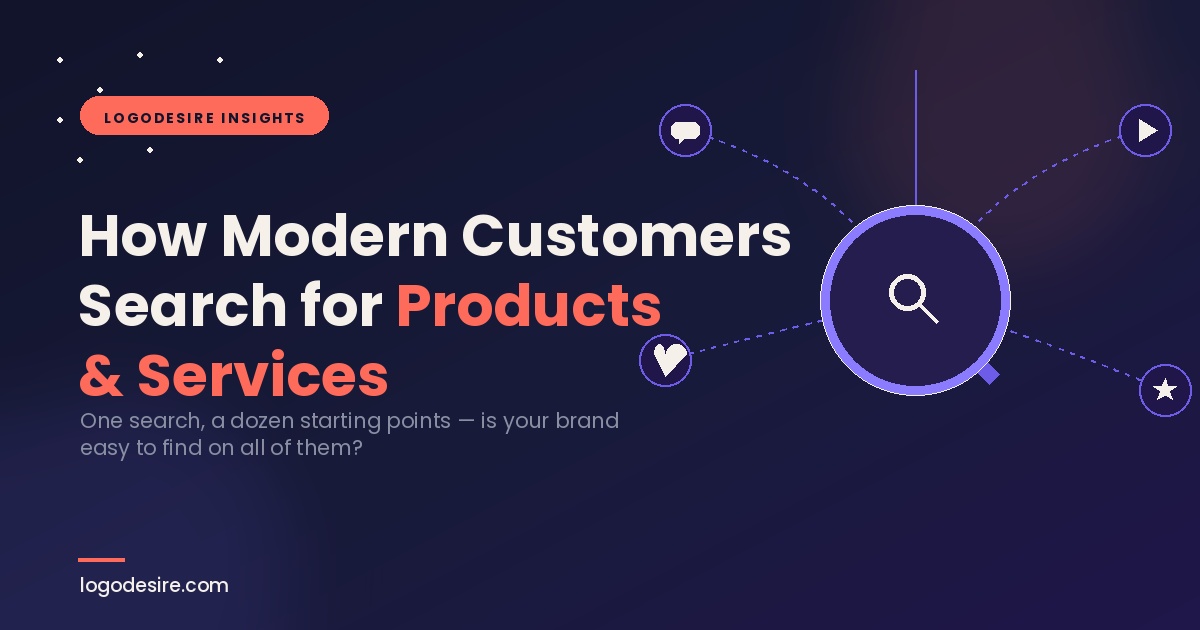
Think about the last time you needed something, a new pair of shoes, a plumber, a logo designer for your startup. Did you open a search engine, type a query, and click the first blue link? Probably not.
Maybe you asked ChatGPT to compare a few options. Maybe you scrolled Instagram and saw someone unboxing the exact product you needed. Maybe you asked a friend in a WhatsApp group chat, or watched a 30-second TikTok review while waiting for coffee. By the time you actually "searched" for something on Google, you'd probably already made up half your mind.
That's the reality businesses are up against today. Customers aren't searching the way they used to, and if your business is still built around the old rules, you're playing a game that changed years ago.
Here's what's really happening.
1. Search Doesn't Start on Search Engines Anymore
Google is still huge, but it's no longer the starting line. Customers now begin their journey wherever they already are: Instagram, TikTok, YouTube, Reddit, even Amazon.
Someone looking for a logo designer might scroll Pinterest for branding inspiration before they ever type a query. Someone shopping for sneakers might see a pair on TikTok and go straight to the brand's page, skipping search entirely.
What this means for your business:
Your website can't be the only place people find you. If you're not visible on the platforms where your audience already spends time, you're invisible — no matter how good your Google ranking is.
2. People Search in Questions, Not Keywords
Nobody types "best logo design service" the way they used to. Now it's "what makes a logo actually memorable" or "how much should a small business spend on branding." Voice search and AI chatbots have trained people to talk to search the way they'd talk to a person.
This shift is being accelerated by AI assistants like ChatGPT, Perplexity, and Google's own AI Overviews, which now answer questions directly instead of just handing back a list of links.
What this means for your business:
Your content needs to answer real questions in a natural, conversational way, not just stuff in keywords. If your website reads like it's talking at Google instead of to a human, both your customers and the AI tools summarizing your content will scroll past you.
3. Trust Comes Before the Click
Modern customers are skeptical by default, and honestly, who can blame them? We've all clicked on a "5-star" product that turned out to be a disappointment. So before people commit to a click, a call, or a purchase, they look for proof.
Reviews, testimonials, case studies, before-and-after portfolios, and real customer stories now carry more weight than polished marketing copy. A design agency's portfolio does more convincing than a page of adjectives ever could.
What this means for your business:
- Show, don't tell.
- Real work, real results, real client voices.
That's what earns the click today, not clever taglines alone.
4. Mobile Is the Default, Not the Afterthought
This one isn't new, but it's easy to underestimate how deeply it shapes behavior. People search while walking, waiting, commuting, half-watching TV. Attention spans on mobile are short and unforgiving.
If a website takes more than a few seconds to load, or looks cramped and confusing on a phone screen, customers don't wait around to figure it out, they bounce to a competitor who made it easy.
What this means for your business:
Your website, your content, even your logo and branding, need to look sharp and load fast on a small screen, because that's the screen most people are judging you on first.
5. Social Proof Has Replaced the Sales Pitch
Here's a shift worth sitting with: people trust other customers more than they trust brands. A short testimonial video or a quick before-and-after post from a real client often does more heavy lifting than an entire ad campaign.
This is why platforms built around authentic, unpolished content- TikTok, Instagram Reels, YouTube Shorts- have become genuine search tools. People type "is [product or services] worth it" into TikTok's search bar the same way they'd type it into Google.
What this means for your business:
Your happiest customers are your best marketing team. Make it easy for them to share their experience, and make sure that content is easy to find.
6. AI Is Becoming the New Front Door
This is the newest and fastest-moving shift. More people are asking AI tools to do the searching for them, "find me a branding agency that specializes in startups" or "compare logo design services under $500." The AI reads across the web, summarizes, and hands back a shortlist.
That means your business now needs to be understandable not just to humans, but to AI systems scanning the internet on a customer's behalf. Clear, well-structured, genuinely useful content has a much better shot at being the answer an AI recommends.
What this means for your business:
Clarity wins. Vague, jargon-heavy branding language won't translate well when an AI is trying to summarize what you actually do and who you do it best for.
So, What Should Businesses Actually Do?
None of this means throwing out everything you know about marketing. It means widening the lens:
- Be findable in more than one place, search engines, social platforms, and AI tools alike.
- Write like a human talking to a human, because that's increasingly who (and what) is reading it.
- Let your real work and real customers do the convincing.
- Make everything fast and frictionless on mobile.
- Stay clear and specific, so both people and AI can easily understand what you offer.
The businesses that win today aren't necessarily the loudest; they're the easiest to find, the easiest to trust, and the easiest to understand, no matter where or how someone is searching.
This article was drafted with AI assistance and reviewed and edited by the LogoDesire team.